Last Update 2nd Feb 2010
page counter
HTML Hit Counters  
Recent Additions
GP Tables / Squad Qualification
GP3 X-Tables
NYCA Report

Welcome to the Kent Junior Chess Association (KJCA) website.

KJCA is responsible for the development of junior chess throughout Kent and south-east London, having been established even before the Second World War. KJCA is staffed entirely by volunteers, all of whom provide a valuable service in contributing to the organisation, with all surplus earnings being re-invested to provide playing opportunities for the benefit of its juniors.
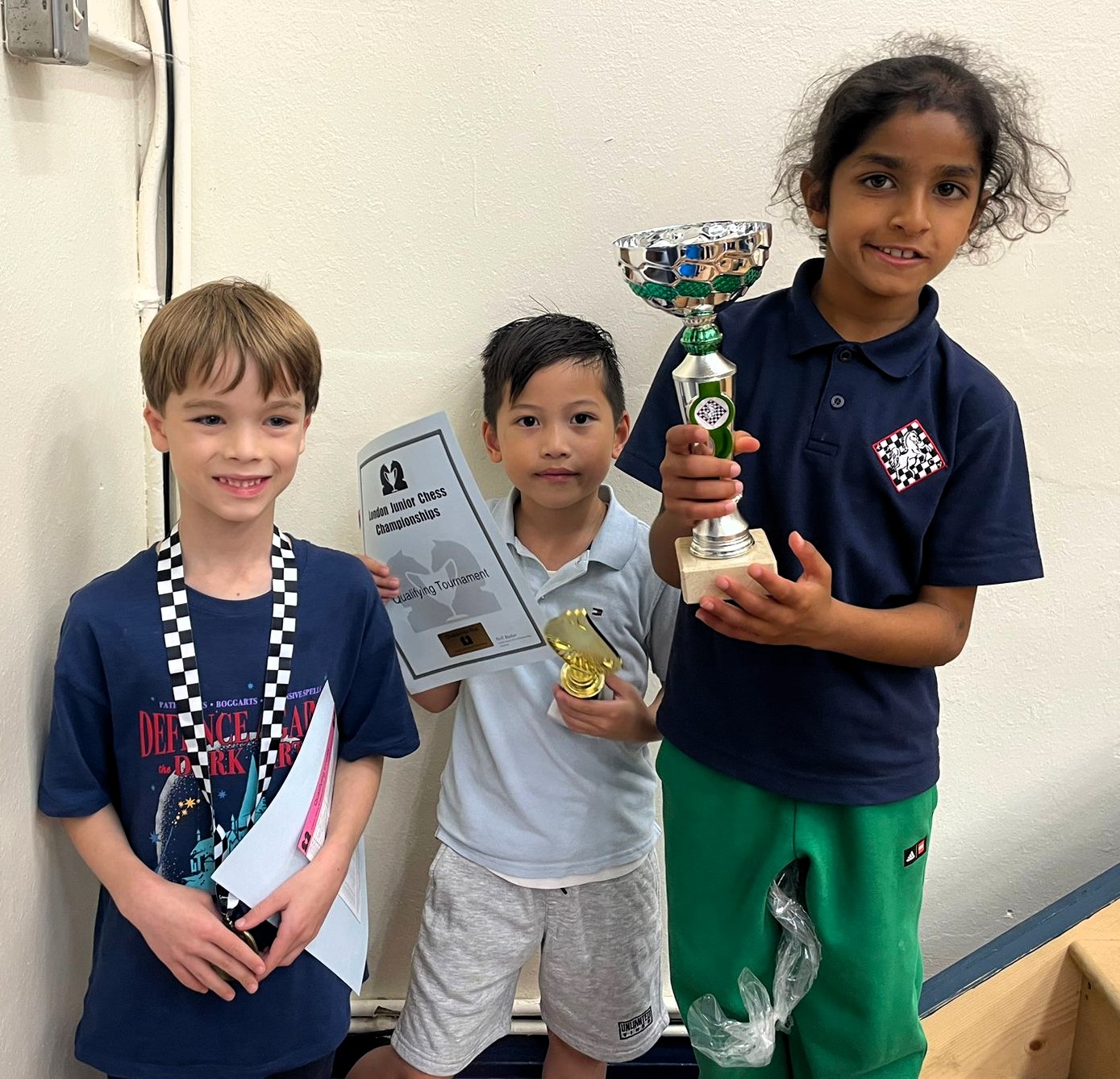
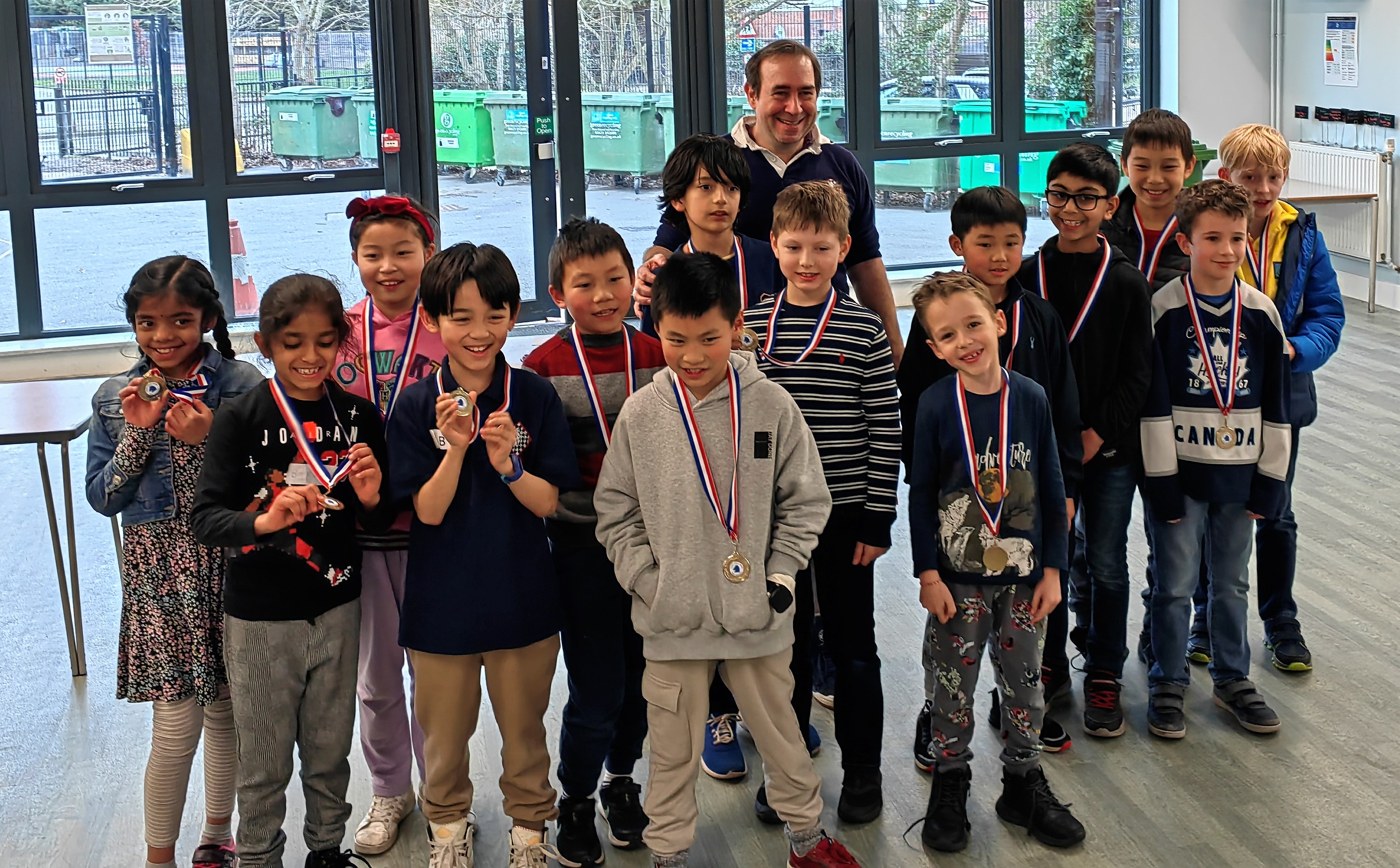
Throughout most of the year, KJCA runs tournaments and coaching days across Kent and South East London.  We also select our junior county teams from Under 9 up to Under 18 age groups to compete in inter-County Championships. The strongest players are encouraged to compete for national and even international representation.
KJCA also liaises closely with local schools and chess clubs to promote the development of school chess teams, so that juniors can maximise their playing potential and contribute towards playing for their county.
An important part of our vision is that families attending our events experience an enjoyable day in pleasant surroundings and a friendly atmosphere, as well as a high quality standard of competitive chess. Win, lose or draw, we hope that you will make friends and come back again. What is more, our catering offers excellent value for money and only adds to the day’s enjoyment!
The strong team spirit engendered among Kent Juniors has resulted in our winning many inter-county titles over the years.  Some of our players have gone on to gain international recognition, as well as becoming FIDE, International and Grand Masters.
Playing chess is both a recreational sport and a way of developing skills in problem-solving, planning and concentration, together with developing a sense of team spirit and life-long learning. All of these skills, we hope, will also complement both the academic and social development of our juniors.
The KJCA website will be updated at regular intervals throughout the year, providing information about both KJCA activities and national events.  We hope you enjoy reading about both our events and achievements, some of which may even be your own

Please email entries to webmaster@kjca.org - Thanks to GM Chris Ward for supplying the puzzles.

Closing date: Entries now closed


Time for something completely different. Simply (okay it might not be that easy!) rearrange the eight white queens so that none of them are on the same rank, file or diagonal. Any correct answer will do! 


Previous Puzzle

Two questions in one here. Assuming as usual the best moves, what should be the correct outcome if it was WHITE to play in this position? Giving an explanation and any necessary variations, now say what the correct result should be if in fact it was actually BLACK to play. 

Solution:
With white to play, 1 b6 wins, if 1...cxb6 2. a6 bxa6 3. c6 and the pawn promotes.
 
if 1 axb6, 2. c6 bxc6 3. a6 and the pawn promotes. Both cases, White wins.
 
With black to play, 1...b6 2. ab6 ab6 3. cb6 cb6 4. Kg1 Kg3 5 Kf1 Kf3 until eventually black goes Kxb5 and then white takes the opposition with Kb3 and a draw is the outcome.

Google


WWW KJCA

Memorial Service

Remembering Robert G. Wade who passed away on November 29th, 2008

Monday August 17th 7:00 pm

To be held at Simpson's-in-the-Strand 100 Strand, London, WC2R 0EW

We hope you will join us for this special service.

“He teaches for his dreams”


“Never forget”

BOB WADE IM OBE (1921 – 2008).

Bob Wade was born into a farming family in Dunedin, New Zealand on 10 April 1921. Chess was the cornerstone of Bob’s life from about 1933 – for over 75 years. From 1946, he travelled the world’s chess circuit widely as a professional player and settled in England in 1947. From the 1970s, he became a prolific writer and editor of chess books. He was very involved in chess coaching, especially of juniors, and as an arbiter and chess administrator. Bob lived for over 40 years in Blackheath until 3 days before his death when he was admitted to Queen Elizabeth Hospital, Woolwich where he died peacefully in the early hours of Saturday 29 November 2008.

Bob’s funeral will take place on Tuesday 16 December at 1015 at Eltham Crematorium, Crown Woods Way, Eltham, London SE9 2AZ. It will be followed by a reception at The Jolly Fenman, 64-68 Blackfen Road, Sidcup, Kent DA15 8SW and early next year by a Memorial service in London (details to be announced). All are most welcome to all these commemorative events. No flowers please. Donations to the Bob Wade Memorial Fund c/o the Executors of Bob Wade at HSBC Bank plc, 122 Finchley Road, London NW3 5JD (Sort Code 40-03-02) A/C No. 71555863. The Memorial Fund will be applied in the first instance towards the above commemorative events with the residue going to a junior chess organisation(s) at the request of Bob’s surviving family in New Zealand.

Much has been written elsewhere in tribute to Bob’s distinguished playing career and his stature on the world chess stage in many capacities during more than six decades. Although he coached many Kent juniors during the long period in which he lived in south-east London, his official involvement with the KJCA only began in the summer of 2004. It is a mark of the man, however, just what an integral part of the Kent Junior Chess family he became over the following 4½ years. He was recommended as Arbiter by some of the local parents whose children he coached. We wanted to establish consistent application of the rules – especially, the two-minute rule – and, of course, Bob, as one of the authors of the sport’s first official rules for FIDE, swiftly achieved this.

It was soon apparent that he was a fountain of ideas. At his suggestion, we set up an Analysis Room in the tournament halls to which juniors could bring their games straight to him if they had not gone well. This proved immensely popular with juniors from the very strong to the relative novice. They would all flock around Bob, who would have several games on the go at the same time, with ideas being exchanged from both sides. The children took to him immediately and the parents also for his kindness, modest manner and excellent dry sense of humour.

In addition to his modesty, Bob was a private man and it is interesting reading the many obituaries and tributes to him to see that many of his friends knew parts of his life history but very few, if any, had the full picture. Much of his playing career was unknown to us, including many fine wins and draws against the sport’s top players. Amongst these was Bobby Fischer, the great former World Champion. Bob would, during or after most tournaments, address the parents and/or children for a quarter of an hour or so. On one of these occasions in early 2008, he spoke of his friendship with the late Bobby Fischer and of his secret role in preparing him for his World Championship matches against Boris Spassky. These talks always contained an underlying advisory message – in this case, obviously, to encourage the juniors to prepare for their matches.

His talks were always well-attended and would focus on helping the juniors with their chess – either to help themselves or, more frequently, to advise the parents how they could best assist their children to improve.

Bob instituted a number of other traditions at our tournaments. These were not always related to chess. He quickly established a bond with the army of catering volunteers. They decided that he needed feeding up and would regularly provide his favourite toasted cheese sandwiches, cakes and cups of coffee. He, on the other hand, noted that they would start to flag during the afternoons and would always bring a bottle of wine – either New Zealand White or Australian Red – which he would share with them and the other helpers. They have announced that this is a tradition that they intend to continue! Of course, these were Bob’s days off from healthy eating. His undiminished mental capacity to the end was a testament to an Omega 3 diet. Roll mops were a particular favourite and he did often suggest, tongue in cheek, that caviar would make a good addition to the tournament menu!

It was also Bob’s suggestion that we should have a website puzzle. He would explain the answer at the end of the tournaments and draw the prize winner out of the hat. He was a staunch supporter of the problem-solving community. When acting as arbiter at our Caterham Congress, he would also play graded friendlies if there were an odd number of byes in any round.

All of this hopefully presents an image of a man of remarkable energy and enthusiasm, especially considering that he was well into his eighties. At our last Caterham Congress in late October, he was proudly showing his new ECF Arbiter’s badge just received with an expiry date of 2028 and joking about their immense confidence in his longevity! Although this was sadly misplaced, he was surrounded by a loyal group of close local friends, who would frequently protect him from his fierce independence. Bob would, for example, plan how he was going to travel to his regular chess outings by public transport. This was normally nipped in the bud before he managed to put it into practice by someone arranging to or at times insisting on giving him a lift in both directions. Bob lived his life to the end for chess (and for his cats) and was still involved with chess on a daily basis, whether in research, coaching, arbiting or playing (for Athenaeum). His input into the first version of the revision guides for the Certificate of Excellence course was considerable (it is the second version that is now available on our website). It was only three months before his death that he played in his last Grand Master tournament.

Right to the end in hospital, his energy and enthusiasm remained undiminished. He was planning his trip home to New Zealand in January/February to play in the Queenstown Open and more locally to our Family and Friends tournament, which was played as a celebration of his life, the day after his death. What a pity that he didn’t quite make this, as it would be hard to think of a more appropriate final tournament! It was marvellous that he also retained his mental agility to the end, as Bob would have been lost without this.

Bob was a friend and inspiration to all our juniors and parents and a true bastion of the Kent Junior Chess family. He will be remembered fondly by all for his kindness, generosity, cheerfulness, modesty, enthusiasm, energy and humour. His remarkable mental powers will remain long in our memories. He will be greatly missed by all. We will seek to establish an appropriate permanent memorial to Bob early in the New Year.